Edge AI: Running Large Language Models on Devices
In 2024, running a capable language model required cloud access—a remote server processing your prompts and returning responses. By 2026, this assumption has flipped. Apple's Neural Engine, Qualcomm's Snapdragon, and dedicated AI accelerators from MediaTek now run models with billions of parameters directly on smartphones, laptops, and edge devices. This shift toward edge AI represents a fundamental change in how we interact with intelligent systems.
Why Edge AI Matters
The move to edge AI addresses several critical concerns that limited cloud-based AI adoption:
Privacy and Security
When AI runs locally, data never leaves the device. Sensitive conversations, personal documents, and private information remain under user control. This privacy guarantee opens AI capabilities to use cases previously impossible—healthcare applications, legal document analysis, and financial planning all benefit from on-device processing.
Latency and Reliability
Cloud AI introduces network latency—a few hundred milliseconds for round-trip communication. Edge AI responds instantly, enabling real-time applications like live translation, augmented reality overlays, and interactive voice assistants that feel genuinely responsive.
Offline Capability
Cloud AI becomes unavailable when connectivity fails. Edge AI continues working regardless of network status—a critical requirement for applications in remote areas, airplane mode, or simply areas with poor connectivity.
The Technology Behind On-Device AI
Running large models on resource-constrained devices requires multiple optimization techniques working in concert.
Model Quantization
Full-precision models use 32-bit floating-point numbers for weights. Quantization reduces these to 8-bit integers or even 4-bit representations, dramatically reducing memory requirements and enabling faster inference on integer-only hardware. Modern quantization techniques preserve 95-99% of model quality while reducing size by 4-8x.
# Quantization example using common libraries
from transformers import AutoModelForCausalLM
from optimum.quanto import quantize, qint4, qint8

# Load and quantize model
model = AutoModelForCausalLM.from_pretrained("meta-llama/Llama-3-8B")
quantize(model, weights=qint4)  # 4-bit weight quantization

# Result: 8B parameter model shrinks from ~16GB to ~4GB
print(f"Model size: {model.get_memory_footprint() / 1e9:.2f} GB")
Specialized Hardware
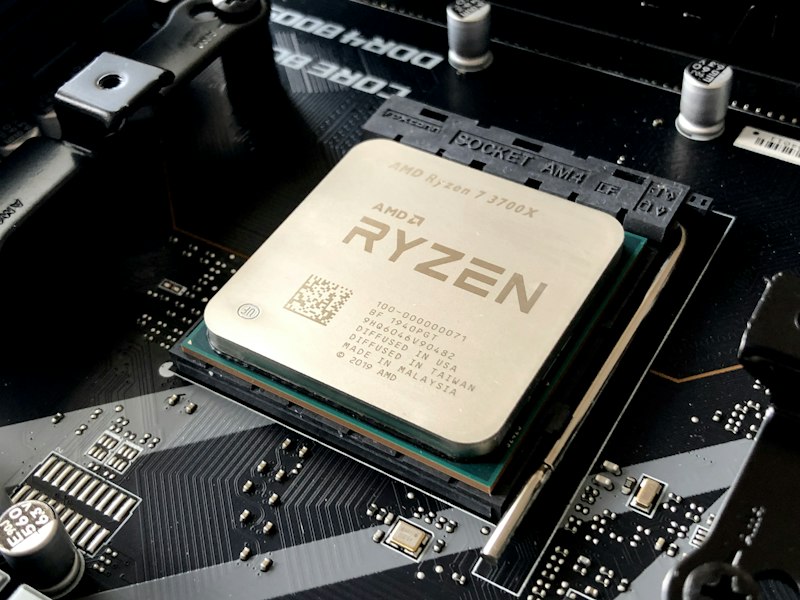
Dedicated neural processing units (NPUs) perform matrix multiplications—the core operation in neural networks—with extreme efficiency. Apple's A18 Pro chip processes 38 trillion operations per second for AI workloads. Qualcomm's Hexagon NPU delivers 45 TOPS (tera operations per second). These specialized units outperform general-purpose CPUs by 10-100x for AI inference.
Knowledge Distillation
Distilled models transfer knowledge from large "teacher" models to smaller "student" models. The student learns to mimic teacher outputs while maintaining a fraction of the size. This technique produces models optimized for edge deployment that retain most of their larger counterparts' capabilities.
What's Running on Devices Today
By late 2026, several categories of on-device AI have achieved mainstream adoption:
| Application | Model Size | Device Type | Capabilities |
|---|---|---|---|
| Siri/Gemini Nano | 3B parameters | Smartphones | Text generation, summarization, translation |
| Microsoft Phi-4 | 14B parameters | Laptops, tablets | Coding assistance, document analysis |
| Llama Mobile | 7B parameters | High-end phones | General purpose AI, voice assistants |
| Whisper Local | 39M parameters | Any device | Speech recognition, transcription |
The Tradeoffs
Edge AI isn't universally superior to cloud AI. Several tradeoffs shape where each approach makes sense:
Capability Gap: The most capable models—o3, GPT-5, Claude Opus—require datacenter-scale resources. Running them on devices remains impossible with current technology. Edge models sacrifice some capability for accessibility.
Memory Constraints: Even with quantization, large models demand significant memory. A 7B parameter model requires 4-8GB RAM, limiting compatibility to relatively powerful devices.
Update Complexity: Cloud models update continuously. On-device models require app updates, creating fragmentation where different devices run different model versions.
The Future of Edge AI
The trajectory is clear: edge AI capabilities will continue expanding. Apple's roadmap suggests phones running 70B parameter equivalents by 2028. Qualcomm predicts laptops will handle 200B parameter models within three years. Dedicated AI chips for IoT devices are bringing intelligent capabilities to sensors, cameras, and appliances.
This democratization of AI capability fundamentally changes who can benefit from intelligent systems. Regions with limited internet infrastructure gain access to the same AI capabilities as connected urban areas. Privacy-sensitive applications become possible without trusting third-party clouds. The concentration of AI power in a few large companies begins to shift toward distributed, user-controlled systems.